
Before harm is fully understood, it is often first experienced as hesitation.
A sentence lands slightly off. A smile arrives a moment too late. A comment passes through conversation without announcing itself as significant, yet it lingers. Something registers in the body before the mind can fully name it.
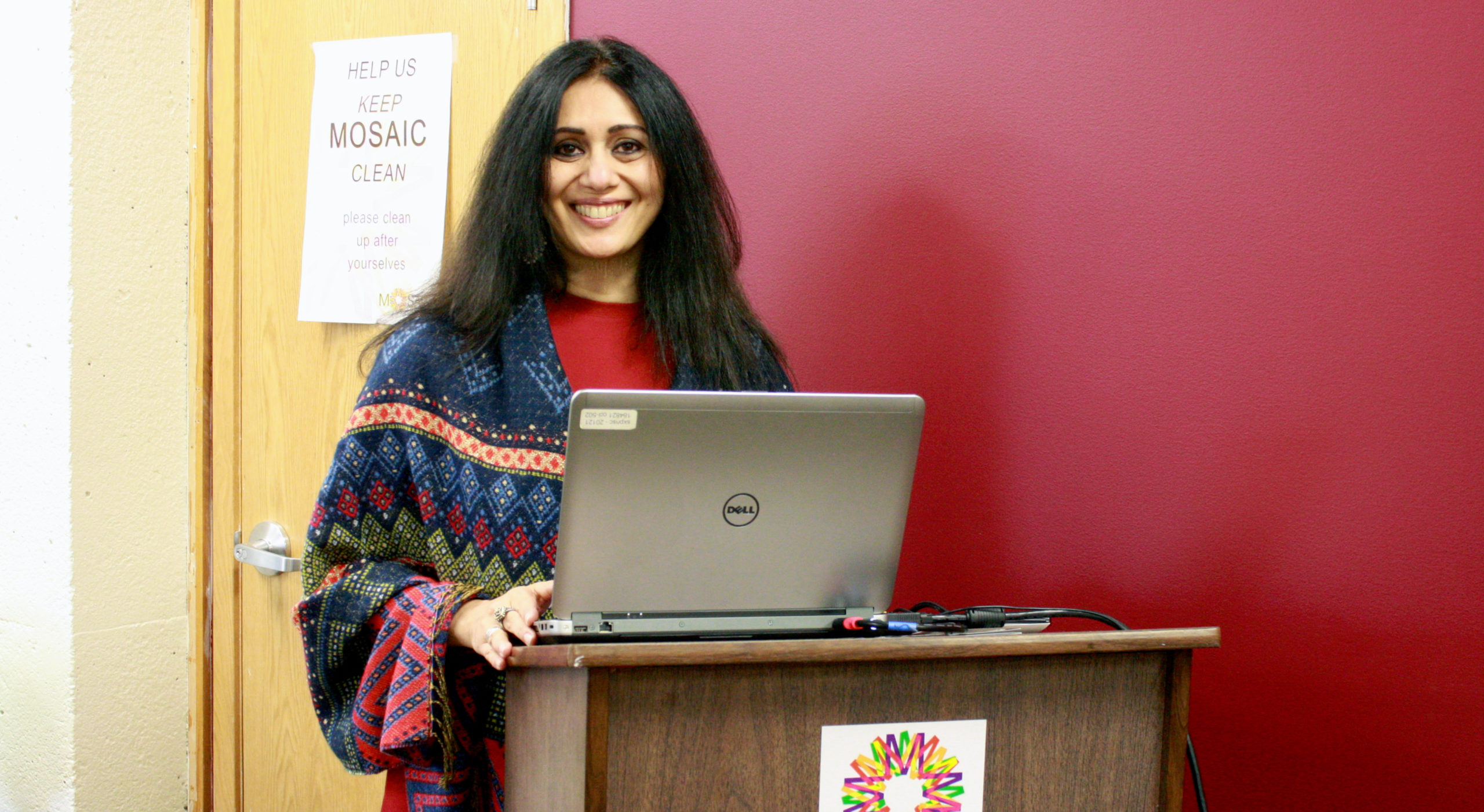
Mara Ahmed’s new documentary The Injured Body begins in this fragile terrain where experience is real, but recognition remains uncertain. The film examines racism not only as ideology or overt hostility, but as a slow shaping of perception under unequal conditions. It asks what happens to the human spirit when people are repeatedly taught to question the validity of their own experience.
In Ahmed’s framing, this tension between the subtle and the overt is central. Because the film focuses on racial microaggressions, it moves between explicit acts of racism and more ambiguous everyday interactions. These moments are often unmarked, not legally legible, and therefore difficult to stabilize in language. “I knew there was going to be some back and forth,” she explained. “I know that the micro can become the macro.”
The relationship is structural rather than symbolic. The micro and the macro continually shape one another.
She recalls, for example, one participant who described how microaggressions in medical settings had direct material consequences: pain not believed, symptoms dismissed, care delayed or denied. What begins as misrecognition becomes embodied harm. The micro is not small; it is often the threshold through which larger systems operate.
Ahmed also observed how understanding of microaggressions varies across audiences. Among many of the women she interviewed, there was immediate recognition of the term. In other contexts, particularly among some white interlocutors, the concept still required explanation. At times, it can be treated as familiar language without full attention to the structures it names. Beneath the term are systems far larger than the word itself can contain.
The film gathers the voices of women of color across Western New York, not as symbols, but as witnesses. They speak about the quiet negotiations required to move through a society where belonging is conditional and visibility can become vulnerability.
Ahmed is clear about her audience. The film is not made for a narrow or “comfortable” viewer. “This film is for everyone,” she emphasized. “I don’t make films for a ‘niche audience.’ I want everyone to watch them.”
At the same time, she resists the idea that the film exists primarily to educate those in dominant positions. It is also, and urgently, for those at the margins — people of color, queer communities, and others whose experiences are often pushed to the side. The goal is not to center suffering, but to center presence: to place those lives at the center of the frame as protagonists, not exceptions.
In this sense, the film becomes a shift in perception. Those most often rendered peripheral are returned to the center of the visual field as fully realized subjects of their own lives.
The film’s title draws from Citizen: An American Lyric by Claudia Rankine, which asks:
“How to care for the injured body,
the kind of body that can’t hold
the content it is living?”
That question runs throughout the film. Ahmed does not resolve it. She holds it open.
What is often called a microaggression appears here not as isolated incident, but as atmosphere. Harm accumulates: a dismissive remark, a glance that lingers, an exchange that requires explanation where none should be necessary.
Then comes the deeper injury — the destabilization that follows.
Was that really racism?
Did I misunderstand?
Am I overreacting?
Oppression survives, in part, through this uncertainty. Violence does not always announce itself. It works through everyday interactions that encourage people to doubt their own perception.
Ahmed also reflects on how even well-meaning conversations can reproduce this ambiguity. In discussions with white friends seeking examples of microaggressions, she recalls how explanations often drift toward minimization — “maybe that’s just how the person is” — as if intent alone determines impact. Yet this response itself becomes part of the structure: the refusal to fully recognize another’s experience as real.
This is why language matters — but so does what language points to. The task is not only awareness, but the ability to recognize harm as it occurs, before it is rationalized away.
This insight calls to mind Martin Luther King Jr., whose vision of nonviolence was rooted in truth-telling rather than passivity. King recognized racism as structural, spiritual, and psychological, shaping both institutions and perception.
In Letter from Birmingham Jail, he rejects the “tranquilizing drug of gradualism.” Again and again, Black Americans were told to wait, to be patient, to seek justice at a more “reasonable” pace. These responses appeared moderate, yet they preserved inequality while placing the burden of restraint on the oppressed.
Ahmed’s film moves within this same moral landscape. The women who speak in The Injured Body describe the exhausting labor of remaining composed in environments that continually question their humanity. Over time, this vigilance settles into the body itself.
The film traces the emotional and physical costs: anxiety, estrangement, eating disorders, psychic fragmentation, and thoughts of self-harm. Ahmed approaches these realities with care and restraint, refusing spectacle in favor of sustained attention.
These wounds are not only personal but social.
To move through a world shaped by racial suspicion is to anticipate harm before it arrives. The body learns caution. Speech becomes measured. Visibility becomes risk.
For Muslim communities in particular, the film recognizes how surveillance and xenophobia intensify this condition. To be seen publicly can mean exposure rather than recognition. Ahmed captures the tension of living in a society where belonging is never fully secure.
Yet the film is not only about injury. It is also about presence, healing, and return.
The dances emerge from an earlier collaboration with Mariko Yamada, following a 2017 Fringe Festival piece that blended live dance, film, and text. In that process, Ahmed came to see dance as a kind of language of the body — foreign in form, but immediately legible in feeling. It integrated naturally with film.
From the earliest stages of The Injured Body, she knew the focus would be the body itself. Dance, as an art form where the body is both medium and message, became an essential counterpoint. It opened an alternative narrative thread within the film.
Choreographer Mariko Yamada extends this dimension through her own embodied perspective. Introduced to Ahmed through a colleague, she entered the project with the intention of learning through collaboration about racism in the United States. As an immigrant of color with an accent, she brought her own lived experiences of racism — experiences that had affected both body and mind.
Working on the film, she describes, allowed something to come into focus. What she had lived through became speakable. “They were indeed real,” she noted. “I was able to articulate what I was experiencing with language. I understood what I experienced. Dots were connected. Things made sense.”
Her choreography also resists narrowing the film to injury alone. Working closely with performers Andrea, Gloria, Joyce, Maria, Nanako, and others, she was struck by the beauty, strength, and resilience of the women on screen. Despite the heaviness of the subject matter, she sought to foreground their presence through movement: joy, persistence, power, and collective affirmation.
The dances become a counter-language within the film — insisting not only on what has been endured, but on what remains vibrant and unbroken. “We are absolutely okay to take up as much space as everyone else,” she reflected, “and we will lift each other up.”
Most of the dances are filmed outdoors. This choice is intentional. It returns the body to nature, reestablishing a primal relationship between movement and breath. These sequences create space within the film, allowing viewers to process what they have just heard.
They offer pause, not interruption.
Ahmed is attentive to this rhythm. The film does not only ask viewers to understand suffering; it gives them room to absorb it.
The Injured Body offers a challenge to all of us. It asks what nonviolence requires in a society structured by unequal recognition.
Nonviolence is not only the absence of violence. It is the discipline of truthful relationship. It requires the courage to perceive suffering clearly rather than retreat into comfort or defensiveness.
King’s vision of the Beloved Community emerges here not as abstraction, but as practice. It calls for transformed perception and the ability to encounter one another beyond stereotype or projection.
In this sense, Ahmed’s film becomes an invitation to moral attention.
Can we remain present when another person describes a reality we have not lived?
Can we resist the urge to minimize pain in order to preserve our own innocence?
Can we stay in relation when certainty dissolves?
These are not only political questions. They are questions of formation.
As I watched the film from ,y home in Irondequoit, NY, I became aware of how distance shapes perception. One can live near suffering without fully seeing it. Privilege often operates not through cruelty, but through insulation.
The Injured Body gently disrupts that insulation.
The film does not offer resolution. It offers witness. It creates space for voices too often required to explain themselves. In doing so, it reminds us that peace without truth is fragile, and reconciliation without justice becomes performance.
King understood this. The Beloved Community was never about avoiding tension. It was about transforming relationship through courage, accountability, and love grounded in truth.
That work remains unfinished.
Ahmed’s film suggests that the path toward genuine community begins with learning how to see one another clearly — not as categories or projections, but as vulnerable human beings carrying histories, grief, dignity, and hope.
This work is not simple. It requires humility, listening, and the willingness to remain in relation when clarity gives way to complexity.
Perhaps it begins here: not in perfection, but in the disciplined refusal to turn away from one another’s humanity.
https://thelittle.org/the-injured-body/
The Injured Body:
A Film About Racism in America
Premiere & Post-Screening Discussion
Saturday, May 30, 2026 | 11:30am
Little Theatre 1 (240 East Ave.)
Doors open at 11:00am
More here.